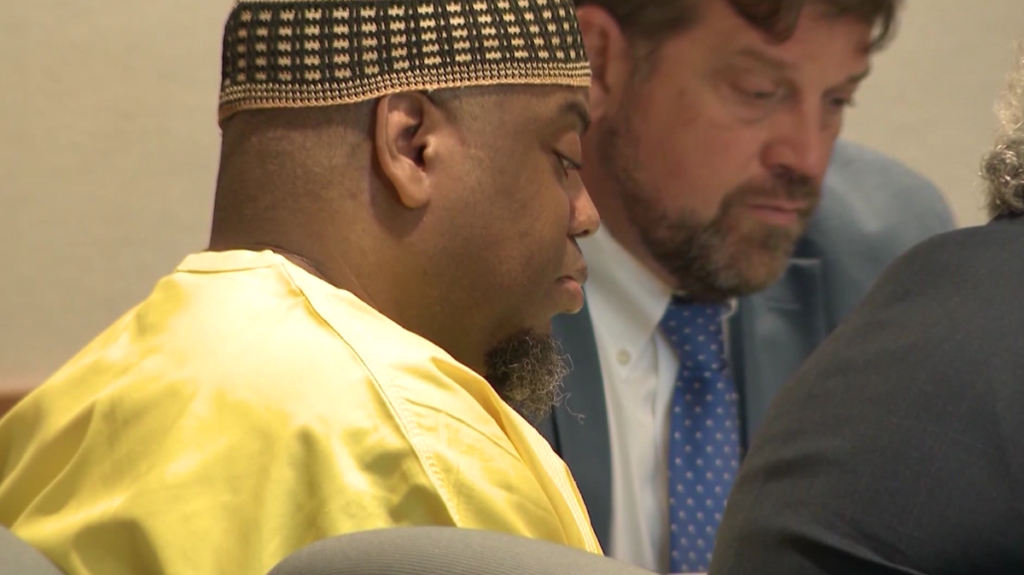
New Hampshire’s highest court has closed another legal door for the state’s only death row inmate, rejecting his petition to have his sentence reconsidered in light of a law that abolished capital punishment. The ruling carries significant weight for a case that has lingered in the courts for nearly two decades — and for the family of a Manchester police officer who never came home.
The New Hampshire Supreme Court dismissed the petition filed on behalf of Michael Addison, who was convicted of capital murder for the 2006 shooting death of Manchester Police Officer Michael Briggs. Addison remains the only person on death row in the state.
The Legal Question at the Center of the Case
Addison’s attorneys argued in March that New Hampshire’s 2019 decision to abolish the death penalty should extend to their client’s existing sentence, citing what they described as a shift in the state’s contemporary values. The argument asked the court to treat the abolition law as a signal that death sentences — including those already handed down — no longer reflect what New Hampshire stands for.
The court disagreed. Justice Melissa Countway, writing for the court, noted that the statute abolishing capital punishment explicitly states it applies only to sentences imposed on or after the date the law took effect. Because Addison was sentenced before that date, the new law does not apply to him.
Countway also addressed the narrower question of whether Addison deserved a fresh comparative proportionality review — a process by which courts examine whether a death sentence is consistent with sentences handed down in similar cases. She concluded it was not required, pointing out that the Supreme Court had already conducted that review and found the sentence to be proportionate. The abolition of the death penalty, she wrote, did not entitle Addison to a second look.
The Attorney General’s Response
The New Hampshire Attorney General’s Office welcomed the ruling and directed attention to the Briggs family, who have waited years for finality in the case. In a statement, the office said:
“This decision marks an important step in the ongoing post-conviction process, and we hope it provides some measure of relief to the Briggs family. The department remains committed to pursuing justice for victims and their families and holding accountable those who harm members of our law enforcement community.”
What Happens Next
The case is not entirely over. Addison’s attorneys have the option to file a motion asking the court to rehear the petition, which could extend the legal proceedings further. Reporting on the case has been followed closely by outlets including WMUR, which has tracked developments since Briggs was killed.
New Hampshire has not carried out an execution since 1939, and Addison’s case continues to exist in a legal space shaped by that long gap — a state that retains a death sentence on the books even as it has moved away from capital punishment in law and in practice.