Across rural America, millions of acres of farmland are quietly approaching a crossroads — not because of drought or debt, but because the people who have worked that land for decades are getting older, and the question of what comes next is one that too many farm families are avoiding.
The average age of a farmer in the United States is 58, and it’s rising. According to USDA data, at least 50 million acres of Midwestern farmland — an area roughly the size of Nebraska — are expected to change hands before the end of this decade. How that transition happens, or whether it happens at all in a planned way, will shape the future of family farming in this country.
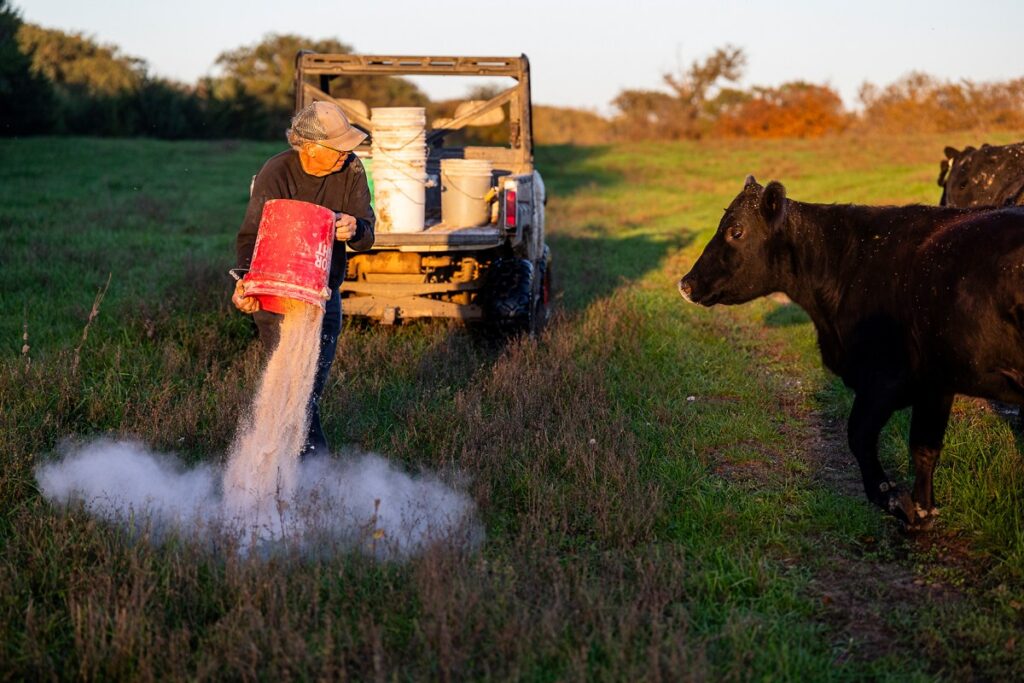
At Early Morning Harvest, a family farm in Iowa, Earl Hafner, 79, still rises before dawn to feed cattle and climb into the combine during harvest. His son Jeff now owns the farm and leads its daily operations, including an on-site flour mill, crops, a greenhouse, and a farm store. The transfer of ownership took years of deliberate mentorship, honest conversation, and gradual handover — and it stands as a model for what farm succession can look like when it’s done right.
“I just see so many other farms just get sold, highest bidder, and so there goes all the memories and your hard work. If you do it right, the next generation will inherit something and hopefully they will see, if they manage it, it’s a good asset to have.”
— Earl Hafner
Why Families Avoid the Conversation
Despite the scale of this generational shift, farm succession remains a deeply uncomfortable subject for many families. Wesley Tucker, an agriculture business specialist with the University of Missouri Extension, says the discomfort is rooted in both fear and identity.
“Farm succession is a huge need in rural America, but it’s a topic that a lot of people choose to ignore. They don’t want to deal with it, partially because no one wants to think about their upcoming demise. No one wants to think about death.”
Tucker describes his work less as financial advising and more as family counseling. He provides workshops and one-on-one sessions to help farm families navigate the emotional terrain of handing over a business that is also a home, a livelihood, and a legacy.
“We know there’s conflict that’s going to exist, so it paralyzes people with fear. They are afraid to make a mistake and do something wrong, so instead, they choose to do nothing, and that’s the worst thing that they can do.”
He’s blunt about the consequences of inaction. When families assume that goodwill among siblings will be enough to sort things out after a parent is gone, Tucker warns the outcome is usually the sale of the farm.
“That’s a common thing that people will say, ‘Well, my kids get along pretty well. I think they’ll work it out.’ My advice whenever I hear that is, why don’t you just go get the for sale sign now? Because that’s probably what’s going to happen.”
Tucker notes that both hard times and prosperous ones can prompt families to finally address succession. The COVID-19 pandemic, he says, was a turning point for many.
“The pandemic in 2020 changed a lot of people’s perspective on how short life can be. I even saw an uptick after 2020 of people realizing that, wait a minute, maybe I need to get my house in order because we’re not guaranteed tomorrow.”
Start With Vision, Not Paperwork
Martha McFarland, farmland transition manager at the nonprofit Practical Farmers of Iowa, points out that nearly 40% of farmland in Iowa is owned by someone 75 years or older — a figure that underscores just how urgent the issue has become.
One of the most common mistakes she sees is families going straight to a lawyer before having meaningful conversations about what they actually want.
“If you were going to redo your kitchen, you wouldn’t bring in a contractor and say, ‘Hey, what color should I paint my walls?’ More than likely, as you bring in a contractor, you have the vision, you know what you want to do.”
McFarland advises families to establish their goals — for the farm, for the family, and for the land — before any legal or financial planning begins. That means asking hard questions about legacy and purpose.
“You’re asking a farmer whose whole identity is wrapped up in farming not to be a farmer anymore. Like, how do we figure that out? How do we help someone feel like they are passing along that legacy, that they’re passing along that vision for the land, that care for the land, in a way that they still, at the end of the day, feel like that they have a purpose as well?”
Preparing the Next Generation
Succession planning isn’t just about paperwork — it’s a process that can span decades. Tucker says it starts far earlier than most people realize.
“Succession planning starts when you give your kids their very first set of chores.”
He emphasizes a gradual buildup of responsibility, teaching management and leadership over time rather than treating the handover as an abrupt switch.
“I think that’s what makes the senior generation so afraid. They view it as an all or nothing. They view it as, OK, today I’m the farmer and tomorrow you’re the farmer. That’s not the way it works, or not the way it should work. Are you preparing them to be your successor, or are you treating your kids like hired hands?”
At Kansas State University, Ashlee Westerhold, director of the Office of Farm and Ranch Transition, teaches a course called “Returning to the Farm” to juniors and seniors who want to go back to their family operations.
“We have students actually fill out financial statements and understand, what would my role be coming back? Can I make money farming? How much money do I need to make to support my family? Is that possible?”
She also points out a knowledge gap that can catch heirs off guard.
“A lot of people don’t know the ins and outs of their family business, especially in farming and ranching, until they own it themselves. That can be a really hard place when you haven’t seen financials until you were 55 years old.”
Wyatt Fraas, who works with beginning farmers at the Nebraska-based nonprofit Center for Rural Affairs, stresses that the need for new farmers is both economic and community-wide.
“We’re in the midst of the baby boom retirement surge among farmers, as well as every other occupation in the country. So we need new farmers to come in as replacements, as partners.”
“Farms and ranches are often the economic engine for rural places.”
At the same time, Fraas acknowledges the financial complexity facing retiring farmers. For many, the land itself is their retirement account.
“Their savings or their income or their investment is tied up in the land and the facilities and the business.”
One Family’s Blueprint
When Jeff Hafner returned to his family’s farm after college and military service, his father didn’t hand over the keys — he handed over responsibility piece by piece. Earl encouraged Jeff to make certain elements of the farm his own and taught him the full scope of the operation over time.
“I am blessed that he wanted to be a mentor more than (the) ‘not give it up type’ of an attitude.”
— Jeff Hafner
In 2011, the family launched Early Morning Harvest, a brand of organic products — flour, grits, and cornmeal — made from grains grown on the farm. The venture gave Jeff a clear leadership role and a stake in the farm’s future. When the time came, Earl stepped back deliberately.
“You can’t have two bosses. So I said I would help, but I did not want to be an owner.”
— Earl Hafner
Today, Jeff manages every aspect of the operation. Earl, who still rises early to help with cattle, is content with the supporting role. Both credit open, ongoing communication as the foundation of their successful transition.
“Between him and I officially on the books, yeah, it’s probably done. But between him and I personally, it’ll never be done.”
— Jeff Hafner
Now Jeff is already thinking about his own succession — how to sustain the growing market for Early Morning Harvest products and what legacy he’ll eventually pass on. The cycle continues.
For more coverage of agriculture and farmland issues, read about why aging farmers and the government want to save farms, but the cost is often too high, how Seymour farmers are building an organic farming community in northeast Wisconsin, and what new Wisconsin legislation could mean for people hoping to buy small farms. You can also read about how a Wisconsin pig farmer is holding on after Washington broke a promise.
This reporting is part of the Mississippi River Basin Ag & Water Desk, an independent environmental reporting network. The original story was published by a desk partner, and you can sign up for the desk’s newsletter here. Wisconsin Watch is a member of the network — subscribe to their newsletters to follow this and other stories. For the full Wisconsin Watch report, visit their coverage of why it’s hard getting into farming — but for many, retiring is harder.