When your bank app stops working, your flight gets delayed, and your work email goes down — all in the same week — it’s natural to wonder if something bigger is going on. A string of high-profile technology outages has disrupted daily life for millions of Americans, and experts are now weighing in on what it all means.
Over the past several days, major disruptions have hit Microsoft’s services, the U.S. air travel system, and several large banks — affecting Americans who depend on these platforms for work, travel, and managing their finances. The back-to-back failures have prompted widespread concern about just how fragile the country’s digital infrastructure might be.
On Monday, customers at multiple major banks reported being locked out of their online accounts. Online banking delays were triggered by a technical issue at JPMorgan Chase, leaving users of several institutions scrambling. That same afternoon, a technology issue also briefly delayed departing United Airlines flights across the country.
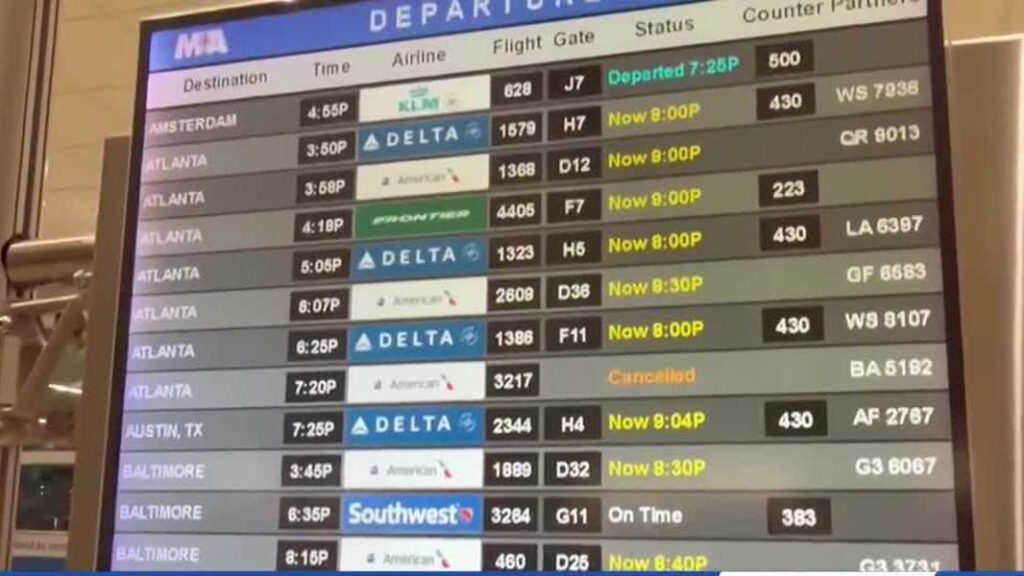
Those problems came on the heels of a major Microsoft outage that struck Thursday, disrupting email and productivity services for users worldwide. Then on Friday, the Federal Aviation Administration issued a rare, nationwide ground stop after a telecommunications failure brought air traffic systems to a halt. Air travel rebounded, though officials warned that future disruptions remain possible as the system undergoes modernization. Flights in Des Moines were among those impacted by the United Airlines system outage Monday.
Are These Outages Connected?
Despite the rapid succession of failures, cybersecurity experts say the incidents are almost certainly not related to one another. Doug Jacobson, director of Iowa State University’s Center for Cybersecurity Innovation and Outreach, says the only real link between them is society’s deep dependence on digital systems.
“They’re unrelated, except for the fact that we have such a reliance on these critical services. Everything is so interwoven, interconnected when those key services start to fail or slow down, it affects much more. Everything is so for ease and convenience; it’s connected, but it doesn’t take much for it to fall over.”
— Doug Jacobson, Iowa State University
Jacobson points out that each outage had its own distinct origin — and that in many cases, a surprisingly small technical problem was enough to cause widespread disruption.
“Microsoft Outlook outage, it started as a small outage. The FAA was a single pair of routers they installed. These banks rely on this one organization, this one group, and that becomes the Achilles heel.”
— Doug Jacobson, Iowa State University
That vulnerability can ripple outward fast. The FAA ground stop affected potentially millions of travelers. The Microsoft outage touched hundreds of millions of users globally. In both cases, a localized failure cascaded into something far larger.
No Malicious Activity — But a Clear Warning Sign
Jacobson was clear that the public has no reason to panic. Investigators found no evidence of cyberattacks or intentional interference behind any of the outages. Each incident appears to stem from isolated technical failures within increasingly complex systems.
United Airlines reported its technology problems were resolved by approximately 5 p.m. Monday. Banks similarly indicated their systems were returning to normal as the day progressed.
Still, Jacobson’s broader message is that the week’s events expose a structural reality: modern life is built on interconnected digital systems, and when even one piece fails, the consequences can be felt far beyond the original source. The convenience that technology provides comes with a hidden cost — the more we rely on it, the more a single point of failure can affect everyone.