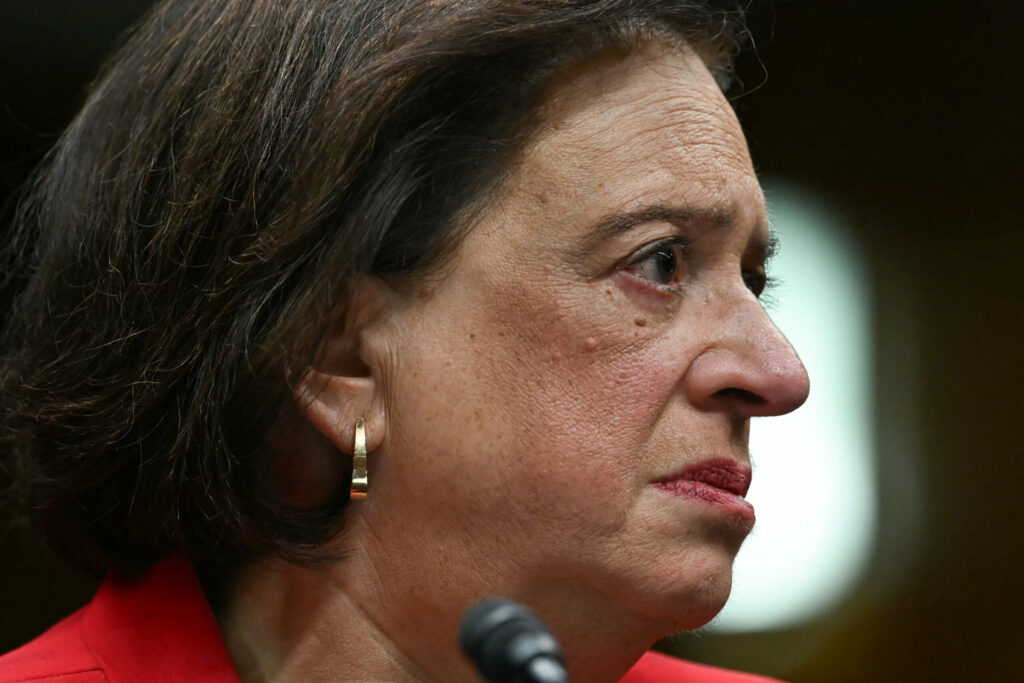
The rules governing who can vote, how districts are drawn, and where campaign money flows shape the foundation of American democracy — and one of the nation’s most prominent jurists says those rules have been badly damaged. Supreme Court Justice Elena Kagan, one of three Democratic-appointed justices on the nine-member bench, delivered a pointed public critique of her own Court just weeks before the 2026 midterm elections, warning that recent rulings have made democracy work less effectively for ordinary Americans.
Kagan made her remarks on October 20 during a public talk at Catholic University’s Columbus School of Law in Washington, D.C., according to multiple news outlets that covered the event. Her comments focused on two major areas: voting rights and campaign finance — both of which she argued have been significantly weakened by the Court’s conservative majority in recent years.
A Court “Blinded” to the Impact of Its Own Decisions
Kagan did not hold back in her assessment of how the Court’s decisions have reshaped American political life.
“The Court has kind of blinded itself to the very deleterious effect of their rulings on how the political system works and has created a democracy that does not work as well as it should,”
she said.
She described election law as
“just about the most important thing that the Court does,”
and called voting rights
“foundational”
— language that underscores how central these legal questions are to every American who casts a ballot.
Voting Rights and the Redistricting Fallout
A significant portion of Kagan’s criticism centered on the Court’s April ruling in Louisiana v. Callais, a decision that dismantled key provisions of the Voting Rights Act — the landmark federal law that has protected minority voters since 1965. The ruling made it easier for states to draw district maps in ways that reduce the political power of Black and other minority voters.
Kagan said the real-world consequences were almost immediate.
“I think what you saw, like literally in the few weeks after that decision was announced, was that a large number of Southern states decided to redistrict in order to get rid of Black districts,”
she said.
When the April ruling came down, Kagan had filed a dissenting opinion accusing the majority of changes that
“eviscerate the law.”
Her remarks at Catholic University extended that dissent into the public square, raising an alarm about what the redistricting wave means for voters heading into future elections.
She also pointed to a separate ruling from 2019 that blocked federal judges from striking down congressional maps drawn for extreme partisan advantage. Kagan said that decision had set off a
“race to the bottom”
in which both political parties have pushed partisan gerrymandering to new extremes. The result, she argued, directly harms everyday voters.
These gerrymanders are
“effectively depriving masses of citizens of their right to voting equality, driving people away from the center towards the wings, towards the extremes,”
she said, calling the trend
“very destructive of our democracy.”
Money in Politics: A “Nightmare” for Voters
Beyond voting rights, Kagan also turned her attention to campaign finance — another area where the Court’s rulings have dramatically changed how elections function. She argued that decisions allowing massive amounts of money to flow into political campaigns have opened the door to corruption and eroded public trust.
“The people of America look around this political system and think that all this money chasing all these political candidates is a nightmare,”
she said.
“And they’re right.”
Nominated to the Court by President Barack Obama in 2010, Kagan has been a consistent voice in dissent as the Court’s conservative majority has moved to limit voting rights protections and expand the role of money in elections. Her public comments — delivered just two weeks before the 2026 midterms — reflect growing concern among legal observers that the cumulative effect of these rulings is being felt by voters in tangible ways, from the shape of their congressional districts to the flood of outside spending that surrounds candidates on the ballot.