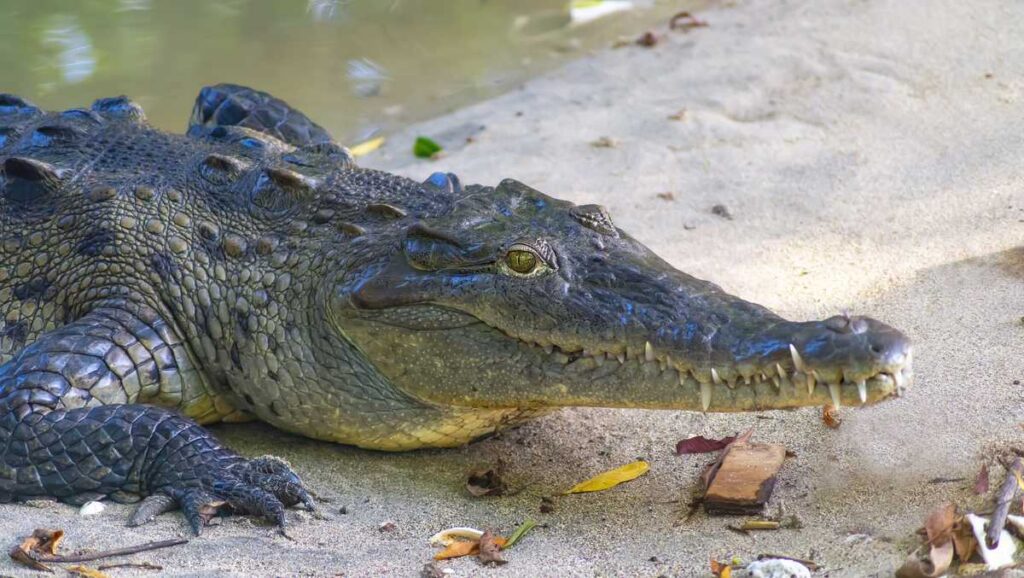
A crocodile that died during a routine wildlife capture in Florida has now been confirmed as the state’s first known case of lead poisoning in an American crocodile, according to the Florida Fish and Wildlife Conservation Commission. The finding has prompted state officials to expand their monitoring efforts across Florida’s crocodile population.
The Florida Fish and Wildlife Conservation Commission announced that researchers conducted a field necropsy on the animal following its unexpected death during what officials described as a routine capture. What they found inside the crocodile’s stomach was striking: more than 22 grams of lead — a quantity comparable in weight to a single household battery.
The lead materials recovered from the stomach included 23 air rifle pellets, one fishing weight, and an assortment of small lead fragments. Researchers also found evidence that the crocodile had consumed at least one green iguana that appeared to have been shot with lead ammunition, suggesting the animal was ingesting lead indirectly through its prey.
Signs of Long-Term Exposure
The crocodile showed physical indicators consistent with prolonged lead exposure. Investigators noted severe deterioration of the animal’s teeth and a markedly elevated lead concentration in its liver — both recognized signs of chronic lead toxicity in wildlife.
FWC confirmed this is the first documented case of lead poisoning in an American crocodile in Florida. Following the discovery, the agency said it plans to conduct additional sampling for lead and other contaminants in American crocodiles at locations across the state.
The case raises broader questions about how lead from human activity — whether from air rifle pellets used to control invasive species like green iguanas or from discarded fishing weights — can work its way into local wildlife through the food chain.
For more news from around the country, including a report on 7 coffins containing human remains found at a North Dakota governor’s residence, a story about a man hospitalized after a stabbing in rural Polk County, coverage of West Des Moines approving a second reading of a scooter and e-bike ordinance, and details on a man arrested for a shooting on I-35 in Warren County, additional reporting is available from regional news outlets.