Every parent worries about what their kids are consuming — but most aren’t watching for something that looks like a breath mint and fits invisibly between a teenager’s lip and gum. A new product is making its way into schools across the country, and federal health policy hasn’t caught up with it yet, leaving families largely on their own to navigate the risk.
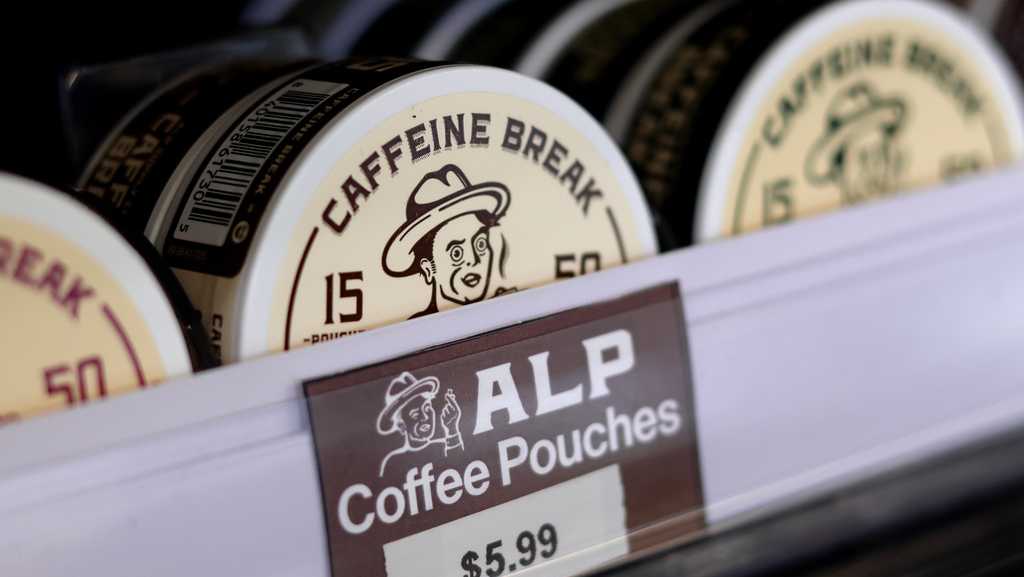
Caffeine pouches — small packets placed inside the mouth that release caffeine directly through oral tissue — are marketed as a discreet, portable energy boost. Some contain up to 200 milligrams of caffeine, roughly the equivalent of two cups of coffee, according to the American Academy of Pediatrics. Unlike a coffee cup or energy drink can, these pouches are nearly invisible in use, have no federal minimum purchase age, and closely resemble nicotine products — making them difficult for even trained school staff to identify. That combination of accessibility, potency, and disguise is exactly what has health experts and school officials sounding the alarm.
A Product With No Federal Age Floor
The FDA considers up to about 400 milligrams of caffeine per day generally safe for healthy adults. But there is no federal minimum age to purchase caffeine pouches, and no requirement that retailers restrict sales to minors. That means the consumer protection guardrail that exists at the point of sale for tobacco and alcohol products simply doesn’t exist here. For families, this is a significant gap — one that places the entire burden of awareness and enforcement squarely on parents and schools, not on manufacturers or retailers.
The pouches are sold in appealing flavors — mint, fruit, coffee, even seasonal options like pumpkin spice — that can be mistaken by children for candy or gum. They go by a range of social media nicknames including “lip pillows,” “lip cushies,” and “upper or lower deckies,” depending on where in the mouth they are placed. A parent who doesn’t know these terms may have no idea what their child is talking about — or using. Consumer trade groups and caffeine pouch makers, including ALP Pouch, declined to speak to the Associated Press about the products.
What These Pouches Can Do to a Child’s Body and Daily Life
The American Academy of Pediatrics warns that caffeine from these pouches is absorbed rapidly into the bloodstream, with effects felt within minutes. Health organizations including Nationwide Children’s Hospital in Columbus, Ohio, list potential side effects that include tremors, anxiety, difficulty sleeping, and in severe cases, seizures. Caffeine can remain in the body for more than eight hours depending on a person’s metabolism — long enough to disrupt a school night’s sleep and roll into the next morning. The Academy of Pediatrics’ Committee on Nutrition is clear: the best choice for children is to avoid caffeine altogether.
For teenagers already managing academic pressure and social stress, that disruption can ripple well beyond one bad night’s rest. Rob van Dam, a professor of exercise and nutrition sciences at George Washington University, warned that caffeine pouches could worsen existing anxiety and sleep problems, with cascading consequences for mental health, development, and school performance.
“You can get into a vicious cycle where kids just don’t get enough sleep for their normal development and mental health,” he said.
A teen who relies on caffeine pouches to get through a school day may struggle to fall asleep at night — then reach for another pouch the next morning. That cycle affects not just the child, but the whole family routine: parents managing a chronically tired or anxious teenager, school attendance problems, and health concerns that might eventually require medical attention. Health experts also caution that teenagers may unknowingly stack their total caffeine intake by combining pouches with energy drinks and other caffeinated foods and beverages, pushing well past safe thresholds without realizing it.
Parents concerned about excessive caffeine consumption can contact the Poison Control Center Hotline at 1-800-222-1222. Symptoms such as seizures, difficulty breathing, collapse, or severe heart-related reactions require emergency medical care.
Schools Stepping In Where Federal Policy Has Not
According to a July report from the Centers for Disease Control and Prevention, nearly two-thirds of young people between the ages of 12 and 19 consume caffeine on any given day. Their average daily intake was about 31 milligrams — far below the 200 milligrams that can be packed into a single caffeine pouch. That gap illustrates just how dramatically these products can exceed what teenagers typically consume through food and beverages.
With no federal rules restricting student access, local school districts have become the de facto front line of protection for families. School districts in New York, Kansas, Pennsylvania, and Missouri have added caffeine pouches to student conduct policies or outright banned them on campus. Schools in Michigan and Wisconsin have sent warnings home to families. These communities are essentially writing the consumer protection policy that federal regulators have not yet established.
One of the core challenges driving these bans is that caffeine and nicotine pouches are nearly identical in appearance — and school staff cannot tell them apart. Holton High School in Kansas prohibits the products under its rules against tobacco and simulated tobacco products, with violations potentially leading to disciplinary action or law enforcement citations. In New York, Peru Central School District raised the identification problem directly during a May 2025 school board meeting, after which the district updated its code of conduct to ban caffeine pills and pouches on school grounds.
Associate Director of Student Services Joha Battin explained the practical impossibility school staff face:
“The real issue for us as a school, in the middle and high schools in particular, is that when students are using pouches it’s impossible for us to know what the pouch is.”
Federal nutrition standards do prohibit schools from selling caffeinated beverages to elementary and middle school students during the school day — but those rules say nothing about what students bring from home. That loophole leaves individual districts to craft and enforce their own policies around products that are legal to purchase at any age, look identical to controlled substances, and are actively marketed in flavors that appeal to young consumers. Until federal policy catches up, families remain the last line of defense — and many don’t yet know what they’re defending against.