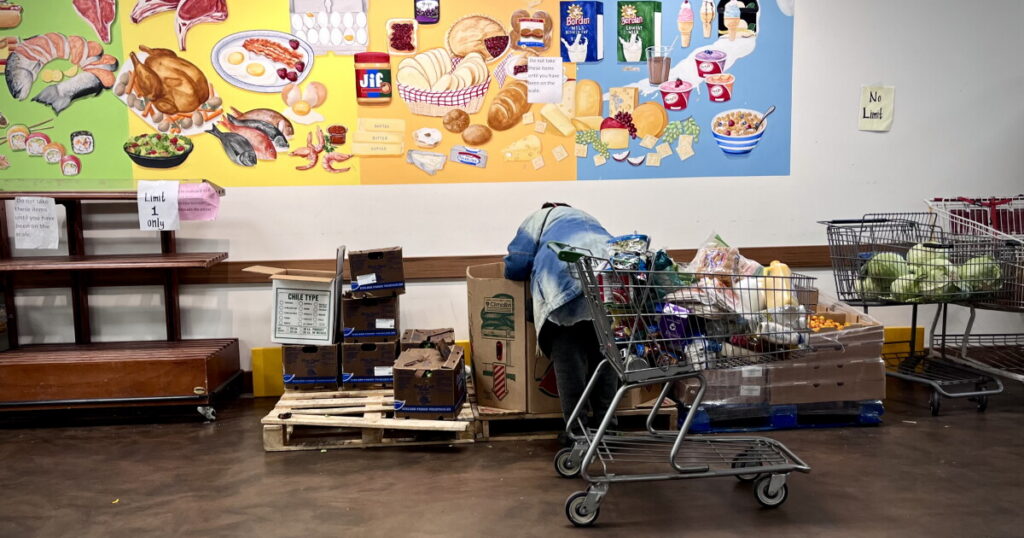
Grocery bills, farm costs, and everyday essentials are getting more expensive for Michigan families — and the state’s governor is demanding answers from Washington. Governor Gretchen Whitmer is pushing back against federal food tariffs, arguing that families across the state are paying a steep and unfair price at the checkout line.
Since April 2025, the federal government has imposed higher import taxes on food supplies, fertilizer, and agricultural equipment. According to estimates from the Michigan Department of Agriculture and Rural Development, those tariffs pushed food prices up by 3% in the state that year — a burden that hits hardest in household budgets already stretched thin.
This week, Whitmer sent a letter to the U.S. Secretary of the Treasury, holding federal trade policy responsible for both rising prices and a drop in Michigan’s agricultural exports. In that letter, she also asked the federal government to refund Michigan residents for the extra costs they’ve absorbed because of the tariffs.
“We need a federal trade policy that works with our allies, brings supply chains home, and makes life more affordable. Families deserve relief from rising prices on the essentials they depend on every day,” Whitmer said.
Why Michigan Families Feel It More
Michigan may be absorbing some of the highest tariff-related costs in the nation on a per-household basis. Data from the National Taxpayers Union Foundation cited by Whitmer suggests the state ranks among the most affected in the country.
Part of the reason, according to Michigan State University food economist David Ortega, is that Michigan’s agricultural sector is unusually diverse — and unusually exposed to trade disruptions.
“We have hundreds of crops and livestock sectors here in the state of Michigan and we are very much interconnected with some of our major trading partners, especially just across the border in Canada,” Ortega said.
That deep connection to international trade means that when tariffs go up, Michigan producers and consumers feel the effects quickly and broadly — from dairy and fruit to equipment and fertilizer used to grow food in the first place.
What Tariffs Actually Cost at the Kitchen Table
Nationally, the Urban-Brookings Tax Policy Center estimates that food-related tariffs have ranged from about 5% to nearly 14% since President Donald Trump launched these policies last April. Trump has defended tariffs broadly as a way to support American businesses, and the Treasury Department did not respond to a request for comment.
While families are feeling the pinch, working out exactly how much each household has been overcharged is complicated. Tariffs are technically paid by importers and exporters — not individual shoppers — which makes calculating a precise refund difficult. Ortega acknowledged that challenge directly.
“It’s hard to know what the actual burden is of that individual tariff on individual consumers. The tariffs are paid for by importers and exporting companies, and so that’s going to be much harder to really nail down,” Ortega said.
Even so, Ortega stressed that the broader uncertainty created by shifting trade policy is doing real damage to farmers and food businesses — and that damage won’t be quick to reverse.
“This is why it’s so important to ensure that the message is getting across that our approach to policy, the approach to uncertainty that’s been created within trade policy and other aspects have made it much more difficult for our producers, our businesses,” Ortega said.
The issue has also reached the courts. The U.S. Supreme Court ruled that many of Trump’s initial tariffs were illegal and ordered the government to repay money it had collected — a legal development that added more complexity to an already tangled trade picture for suppliers and consumers alike.