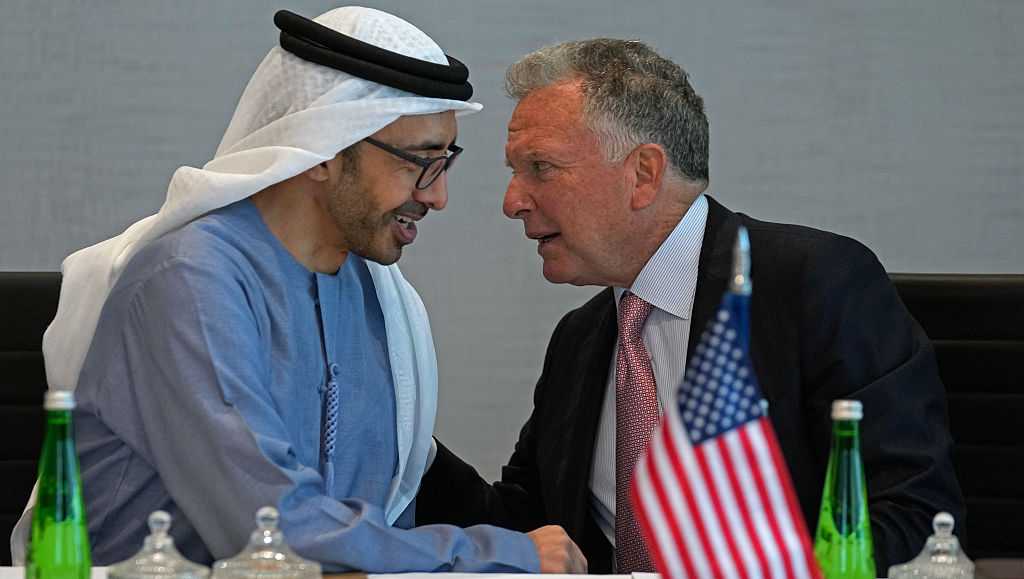
For the first time in nine months, Russian and Ukrainian delegations sat down face-to-face — and while a peace deal remains far off, the two sides walked away with at least one concrete commitment. A major prisoner-of-war exchange is now on the table, offering a rare humanitarian bright spot in a conflict that has dragged on for nearly five years.
Talks brokered by the United States wrapped up Wednesday in Abu Dhabi, with both delegations confirming plans for what could be the largest prisoner swap of the war. Jared Kushner, son-in-law to President Donald Trump and a key figure in the U.S. diplomatic push, announced the agreement after two days of meetings.
“One of the positives is we agreed that we’re going to have the biggest humanitarian release of prisoners, which we’re going to finalize the numbers tomorrow,”
Kushner said at the close of the talks.
The announcement was confirmed by both delegation heads — Vladimir Medinsky on the Russian side and Rustem Umerov representing Ukraine — signaling at least a narrow area of mutual agreement amid broader deadlock.
What the Talks Covered
Expectations heading into Abu Dhabi were modest. The session focused heavily on humanitarian concerns rather than core issues like territorial control or a formal ceasefire. Ukrainian President Volodymyr Zelenskyy described Tuesday’s session as
“constructive and quite substantive,”
noting that discussions touched on prisoner exchanges, Ukrainian civilians held in captivity, and children who have been taken from the country.
Security guarantees were also raised, though neither side has shown meaningful flexibility on its core demands. U.S. Secretary of State Marco Rubio offered a measured assessment, calling the meeting
“very productive”
while cautioning that ending the war would take more time.
Next Steps for U.S. Diplomats
The diplomatic push does not stop in Abu Dhabi. Kushner said he and U.S. envoy Steve Witkoff plan to travel to Moscow on Thursday for a direct meeting with Russian President Vladimir Putin, before flying to Dublin to meet with Zelenskyy. Washington has stated clearly that it wants to revive peace efforts that have so far produced few tangible results.
The broader political landscape has also shifted since the last direct talks in Geneva in February. With Democrats poised to take control of the U.S. Congress following midterm elections in January, the Trump administration may face new pressure to show stronger support for Ukraine.
Europe’s Role Remains Contested
Russia has pushed back against European involvement in direct negotiations, arguing that countries on the continent have a stake in the outcome that compromises their neutrality. Despite that, representatives from European governments, the European Union, and NATO were present in Abu Dhabi — meeting separately with the Ukrainian delegation rather than sitting at the main table. Ukraine’s delegation was also set to meet with European officials on Wednesday.
Fighting Continues Alongside Diplomacy
The Abu Dhabi meetings took place against the backdrop of ongoing violence. On the front lines, relatively little territory has changed hands in recent months, but both countries continue trading long-range missile and drone strikes.
Overnight, Russian strikes hit the southern Zaporizhzhia region and the eastern city of Kharkiv, wounding seven civilians and causing property damage. Meanwhile, Russia’s Defense Ministry reported that air defenses intercepted 627 Ukrainian drones overnight — 150 of them over the area surrounding St. Petersburg, according to regional Governor Alexander Drozdenko. He said the drone attack ignited a fire at the port of Ust-Luga, a major hub for Russian oil exports, injuring three workers.
Ukraine is simultaneously dealing with devastating Russian attacks on its power grid, while Russia’s wartime economy faces growing strain. Both pressures could shape how willing each side is to engage in future rounds of diplomacy. For more on recent strikes, Russia has also recently targeted emergency crews responding to deadly strikes in southern Ukraine.
Reporting follows established editorial standards for accuracy and fairness.