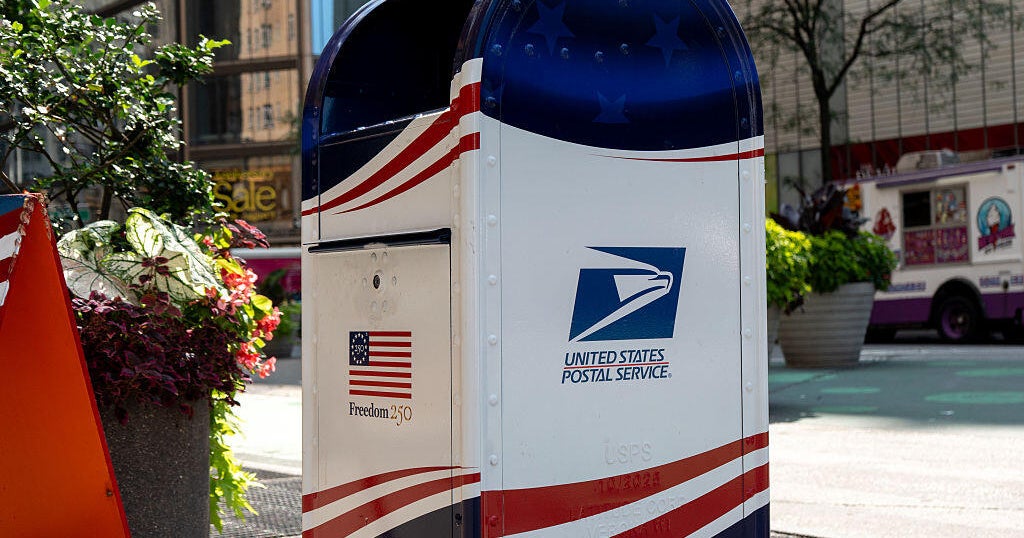
With North Carolina scheduled to begin mailing absentee ballots Friday, the Trump administration on Thursday raced to the Supreme Court to override a federal judge’s block on new U.S. Postal Service rules that opponents say would give the agency broad new control over mail-in voting nationwide.
The Department of Justice filed an emergency application asking the justices to lift a temporary restraining order issued Aug. 27 by U.S. District Judge Indira Talwani in Boston. Justice Ketanji Brown Jackson, who oversees emergency appeals from the First Circuit, asked states and voting rights groups opposing the rules to file a response by Tuesday morning.
Earlier that same morning, Talwani held a hearing to consider whether to extend her block indefinitely as a preliminary injunction — and pressed DOJ lawyers on the agency’s readiness. “I’m here 70 days before the election and I have nothing from USPS telling me how this will happen,” she said from the bench. She declined to rule immediately but said she would act as soon as possible.
What the rule requires
The Postal Service published its final rule last month under a March 31 executive order Trump signed, titled “Ensuring Citizenship Verification and Integrity in Federal Elections.” Under the rule, state and local election officials must enroll eligible mail-ballot voters on a new federal online portal, submitting each voter’s name, address, and an individualized barcode. Ballot envelopes must also meet uniform design standards. Any mailing that does not comply will not be delivered and will be returned to the election office.
The logistical problem
Election officials say compliance before the November 3 election is impossible. Tammy Patrick, chief program officer at the Election Center, a nonprofit association for election administrators, said the envelope-redesign requirement alone cannot be met on this timeline: “We have more than 10,000 election jurisdictions and there are 40 mail design analysts at the Postal Service for the entire country. They would not be able to accommodate everybody redesigning the envelopes.”
The online portal for submitting voter lists is not yet fully operational. Steven Monteith, the Postal Service’s executive vice president, said in a court filing Thursday that the agency continues to make “refinements” and anticipates the portal will be available for voluntary use “by sometime next week.” A federal whistleblower, whose disclosure was submitted to Democratic Sen. Richard Blumenthal, warned of “potentially catastrophic problems” with the unfinished system and alleged the Postal Service had violated an earlier court order while moving ahead with implementation.
The legal battle
Twenty-four Democratic-led states and the District of Columbia are suing to block the rule; Missouri and eleven other Republican-led states have intervened in support of it. When Missouri’s solicitor general suggested making compliance optional in every state, Talwani was blunt: “We’re not playing an intellectual puzzle game. We’re talking about people’s right to vote.”
In her Aug. 27 order, Talwani ruled the regulation “likely unconstitutional,” finding that states “have neither time nor funds to design new mail ballots, seek approval of the new designs, order production of mail ballots, update their own election management systems, train election officials to use the USPS portal, and upload citizen data to the portal, all before the midterms.” She wrote that “USPS’s interest in correcting an unsubstantiated problem through likely unconstitutional means is dwarfed by the overwhelming risk of pervasive disenfranchisement.”
Solicitor General D. John Sauer argued in the Supreme Court application that the rule imposes only “modest envelope-design and addressee-information requirements” and is needed to protect election integrity. The administration has not presented evidence of widespread mail-ballot fraud; Trump has himself voted by mail in Florida elections this year.
The American Civil Liberties Union’s Sophia Lin Lakin, director of the organization’s Voting Rights Project, said in a statement: “The only emergency here is the one the administration created.”
The Supreme Court ruled 6-3 last month on a procedural question in a related case, finding that the states’ earlier lawsuit was premature, but explicitly noted that the ruling “does not mean that any measure taken by the Government to implement the order will necessarily be lawful.” North Carolina begins mailing Friday and Alabama will do so next week — meaning the court’s next move will likely determine how millions of Americans vote by mail this fall.