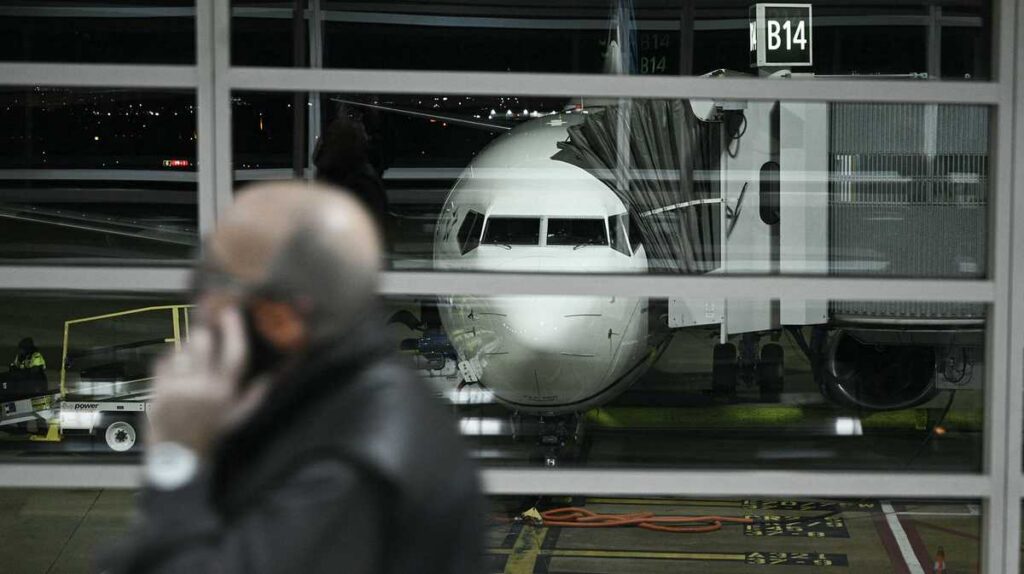
Millions of travelers faced a chaotic Friday after the Federal Aviation Administration halted all domestic flights across the United States — the longest nationwide ground stop in 25 years. While planes are back in the air, the full ripple effects are expected to linger for days.
The nationwide ground stop ended around 8:15 p.m. ET, allowing domestic departures to resume at U.S. airports. But authorities were quick to caution that a return to normal operations would not happen overnight. Officials say the system should be fully operational in time for the Thanksgiving travel rush, though the path there will be slow, authorities warned.
What Travelers Are Facing Right Now
The numbers tell the story of just how widespread the disruption became. According to FlightAware, a website that tracks flight disruptions, more than 2,500 flights were canceled across the U.S. on Saturday, with hundreds more delayed. ‘People in tears’: Travelers around the country react after rare FAA nationwide ground stop captures how deeply this event affected everyday Americans trying to get home or reach loved ones.
Transportation Secretary Sean Duffy addressed the public directly, making clear that patience will be required. International flights are being handled on a case-by-case basis, according to Homeland Security Secretary Markwayne Mullin. San Francisco International Airport confirmed that transpacific flights — including those bound for Hawaii and Asia — were cleared to depart Friday evening. Europe’s aviation agency, at the FAA’s request, suspended U.S.-bound departures from 5 p.m. Eastern on Friday until midnight.
For passengers whose flights were canceled, airlines are legally obligated to offer either free rebooking on another flight or a full refund if travelers decide not to continue their trip. The FAA has advised all passengers to contact their airlines directly for the most current flight information.
What Caused the Shutdown
Trump administration officials pointed to a technology integration problem as the root cause. New equipment being connected to the nation’s aging air traffic control infrastructure overloaded the existing system, triggering questions after the rollout of the new AI air-traffic system. The overload led to what officials described as “intermittent” communications failures and radar gaps — ultimately forcing the more-than-four-hour halt to flights.
An interactive graphic shows the dramatic impact of Friday’s FAA ground stop, illustrating just how empty American skies became during the stoppage.
Secretary Duffy acknowledged that the disruption was not anticipated, saying:
“We didn’t think we would have this kind of outage. We did.”
He also suggested that similar disruptions could occur again as the modernization work continues. The air traffic control upgrade effort began last year after Congress approved $12.5 billion in funding. Duffy and the White House are now pushing for an additional $30 billion to finish the job.
No Cyberattack, No Safety Risk
Amid public concern, officials were emphatic that no passengers were ever in danger and that the event was not the result of a cyberattack or a connection to whether the Microsoft Outlook outage and FAA ground stop were connected. Microsoft confirmed it had no indication the ground stop was related to the widespread service disruption that took Outlook and other platforms offline Thursday.
Secretary Mullin was direct in his reassurances:
“There was never any lives at risk. There was no flights at risk. FAA was able to handle it. We did it.”
Mullin added that the ground stop was enacted
“out of an abundance of caution.”
The FAA and Department of Homeland Security both said there is no evidence of a cyberattack playing any role in Friday’s events.