Federal courts this autumn have repeatedly found that executive agencies broke the law, and when those rulings hold, the communities most exposed to that lawbreaking tend to benefit most. Four of this week’s five wins came from courtrooms; the fifth came from a government deciding to recognize what communities had already done on their own.
A Trump-Appointed Judge Restores the $7 Billion Solar for All Program
A federal judge in Rhode Island — appointed by Donald Trump — ruled in September that the Environmental Protection Agency unlawfully terminated Solar for All, a $7 billion Inflation Reduction Act program to bring rooftop solar to disadvantaged communities. Judge Mary McElroy found the EPA had acted “with no other statutory authority” when it killed already-obligated grants. “EPA broke the law when it killed the program and pocketed the money,” said Southern Environmental Law Center attorney Nick Torrey. “Electricity bills are skyrocketing, so low-cost solar projects — which guarantee big savings — are needed now more than ever.” The agency said it is reviewing the ruling and considering appeal.
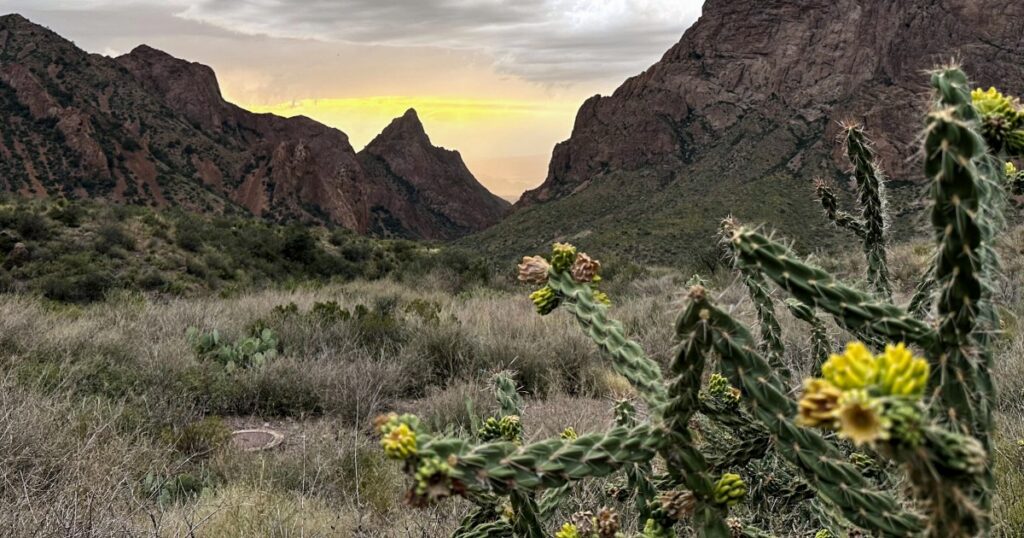
A Federal Court Halts Big Bend Border Wall Construction
On October 2, U.S. District Judge Kathleen Cardone issued a preliminary injunction blocking border wall construction across the Big Bend region of Texas and voiding Department of Homeland Security waivers that had allowed the agency to bypass numerous federal regulations to speed the project. The ruling came after a bipartisan coalition of ranchers, sheriffs, and river guides organized against the project. Laiken Jordahl of the Center for Biological Diversity, which brought the suit, called it “a total victory.” Judge Cardone wrote that “the public at large stand to permanently lose protected wilderness” without the injunction.
Federal Judge Strikes Down DOJ’s Nationwide Voter Roll Sweep
U.S. District Judge Sparkle Sooknanan ruled October 9 that the Justice Department’s push to collect state voter rolls and cross-check them against a federal immigration database to remove voters it deemed ineligible was an illegal abuse of authority. That ruling is the latest in a string: ProPublica’s tracker of the DOJ’s campaign — which targeted 30 states and the District of Columbia — finds all 26 decided cases thrown out by judges appointed by Trump, George W. Bush, and Democratic presidents alike. One West Virginia judge, a Bush appointee, called the government’s claims “devoid of any factual basis.”
The Supreme Court Blocks Missouri’s Gerrymandered Map for the Third Time
For the third time, the Supreme Court blocked a congressional map that Missouri Republican lawmakers drew at President Trump’s direction to unseat Democratic Rep. Emanuel Cleaver by increasing Republican voters in his Kansas City district. The court, ruling September 25, warned that switching maps with absentee ballots already mailed would cause “electoral chaos” and ordered the state to use its 2022 districts. Opponents of the map had gathered citizen signatures to put it to a statewide vote in November.
Mozambique Formally Returns Its Butterfly Forest to the Communities That Kept It
A decree published August 24 by Mozambique’s Ministry of Agriculture, Environment and Fisheries created the 9,341-hectare Mount Mabu Community Conservation Area, placing stewardship with the communities that have protected the forest against logging and agricultural encroachment for generations. Mongabay reports that Mount Mabu holds “the largest continuous block” of medium-altitude forest remaining in southern Africa, home to more than 200 butterfly taxa and more than 30 species discovered in its forests since 2005. “The community, over a long time, kept the forest standing,” said José Monteiro of ReGeCom, one of the organizations working with local villages on the designation.