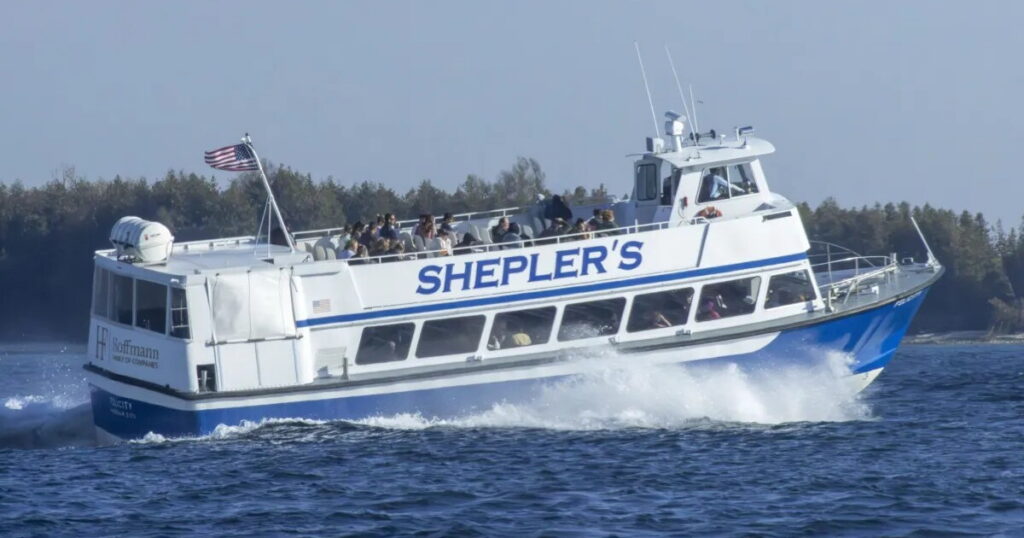
On a small island with no cars, no bridges, and a government unlike any other in Michigan, residents are preparing to cast votes that could reshape their community’s economic future. This November, Mackinac Island voters will decide a ballot measure that goes to the heart of a question democratic communities across America regularly face: who really holds power over the services that define daily life — elected local officials accountable to residents, or a distant private corporation?
The answer, in this case, will be determined not by legislators in Lansing, but by the island’s own residents at the ballot box. That’s a meaningful distinction — and understanding why requires a brief look at how this unusual ballot measure came to be.
A Legal Battle That Ended Up on the Ballot
Since 2004, both of the island’s major ferry lines — Arnold Transit and Shepler’s Inc. — have been owned by Hoffmann Marine, a Florida-based company. For nearly two years, the company has been locked in a legal dispute with island officials over who has the authority to set ferry ticket and parking prices. Today, a single round-trip ferry ticket combined with overnight parking can cost more than $60 — a barrier that some residents say discourages family and friends from visiting.
Rob Klco, who has lived on Mackinac Island for about seven years, described the situation plainly.
“When they start crunching the numbers and doing the math, they realize coming to visit me is going to cost them a couple 100 bucks,”
he said.
Mark Bearss, who became a full-time resident in 2016 after spending summers on the island in the 1970s and 1980s, pointed to parking costs as a particular burden for workers.
“It’s very expensive for people to try to find a decent place to park within a reasonable distance from the ferry dock and leave your car there for weeks,”
he said.
“As someone who lives on the island, there’s a lot of support for this bill.”
How a State Law Alone Wasn’t Enough
In 2025, Michigan State Sen. John Damoose, R-Harbor Springs, introduced Senate Bill 304 to formally expand the island’s authority over ferry services. Speaking at Glen Arbor’s Cherry Pie Debate on October 5, Damoose explained why he felt compelled to act.
“The whole region is dependent on people being able to access Mackinac Island affordably,”
Damoose said.
“It really hurts our economy if they don’t, but the island is literally dependent on this.”
After quickly passing the Senate in 2025, the bill spent over a year in the state House’s Committee on Government Operations before finally passing in May 2026. Gov. Gretchen Whitmer signed it into law shortly after. But here’s where Mackinac Island’s unique democratic structure comes into play — and why the story doesn’t end with a governor’s signature.
Mackinac Island holds a singular distinction among Michigan municipalities: it is the only local government in the state that requires the legislature’s approval before changes can be made to its charter. And even after the legislature acts, any amendment to that charter must still be approved by a majority of island residents at the ballot box. In other words, state law alone is not sufficient. The people themselves must vote yes.
This two-step requirement — legislative approval followed by a direct public vote — is a rare and powerful feature of local democratic governance. It means that on Mackinac Island, residents hold a direct veto over changes to the rules that govern their community, even when the state has already weighed in. November’s vote is not a formality. It is an exercise of genuine civic authority.
What Voters Will Actually Decide
When island residents go to the polls in November, their ballots will ask whether Mackinac Island should
“regulate all aspects of ferry service”
and
“set all charges and prices for, or in connection with, transportation of people and property by ferry.”
If a majority votes yes, the island would gain authority not just over ferry tickets, but also over parking services located on the mainland in Mackinaw City and St. Ignace — a provision that has drawn concern from neighboring communities.
Damoose, expressing confidence that residents will support the measure, said on October 5:
“We got our part done; now I’m expecting that (voters) are going to pass this. I’ll be shocked if they don’t. Overwhelmingly, the residents of the island asked us to take this on, which is why I did it to begin with.”
Neighboring Communities Raise Concerns
Not everyone is comfortable with how broad the ballot language is. Officials in Mackinaw City and St. Ignace — both mainland communities whose ferry docks and parking lots could fall under the island’s new authority — have raised objections about jurisdictional overreach.
Mackinaw City Village Manager Dean Martin warned that the language could create legal ambiguity.
“At worst, they could try to utilize that ‘all aspects’ language to further their governmental overreach into our jurisdiction,”
Martin said.
“At best, it creates confusing legal situations over who has power over what.”
Martin’s community already imposed an annual franchise fee of $200,000 on ferry lines in June to help cover the costs of tourism infrastructure — public safety, sanitation, and other services. He framed the fee as the equitable answer to a familiar local governance question.
“How do we pay for these services equitably, when we have all of these visitors coming in, and we have to create a safe, clean, hygienic and friendly environment for them,”
Martin said.
“The equitable answer is one that is already figured out by the island, which is implementing a ferry franchise fee.”
Even some island residents who support the ballot measure share concerns about its scope. Thomas Sullivan, who has lived on Mackinac Island for nine years, said he plans to vote yes — but with reservations.
“I guess I will support it… but I am a little concerned about how that’s going to affect the cities of St. Ignace and Mackinaw City,”
Sullivan said.
“Will they also share in that revenue?”
The Ferry Company’s Position
Hoffmann Marine, which has owned both Arnold Transit and Shepler’s Inc. since 2004, previously told WCMU that it was
“disappointed”
by the state’s intervention. After the bill passed the state House in May, the company issued a written statement cautioning against price regulation:
“A regulatory approach that limits operational flexibility risks undermining the very investments required to maintain safe, efficient, and high-quality service, ultimately impacting both residents and visitors alike.”
Attorneys for both sides have indicated the legal dispute will continue even if the ballot measure passes. But the November vote carries a significance that no courtroom ruling can replicate: it is the moment when the community itself speaks directly on the question of who governs access to their home.
That question — who decides the rules, and whether those rules serve the people who must live with them — is one that democratic communities have always had to answer. On Mackinac Island, the answer comes this November, one vote at a time. For more reporting on this story, see coverage by Blace Carpenter at WCMU News, as well as this related piece on Mackinac Island’s history as a top Michigan destination, reported by David Nicholas.