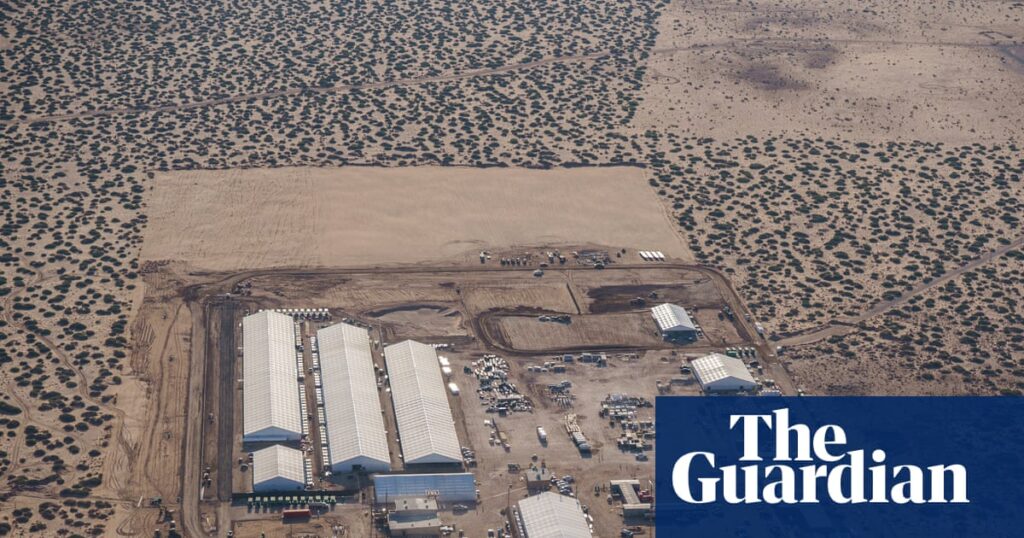
Serious allegations have emerged about conditions at a major immigration detention site on the Fort Bliss army base in Texas. A coalition of civil rights groups charges that migrants held in Camp East Montana face physical abuse, sexual violence and forced removals without legal process.
Coalition letter details alleged violations
In a 19-page letter to senior officials at Immigration and Customs Enforcement (ICE) and Fort Bliss command, eight organizations accuse officers at Camp East Montana of “in violation of agency policies and standards, as well as statutory and constitutional protections”. The American Civil Liberties Union, Human Rights Watch, Estrella del Paso, the Texas Civil Rights Project and Las Americas Immigrant Advocacy Center are among the signatories calling for the facility’s immediate closure. “In light of these abuses, we urge the end to detention of immigrants at Fort Bliss,” the letter states. It was addressed to ICE acting director Todd Lyons and copied to the Department of Homeland Security office of inspector general and the Senate armed forces committee. The full letter is publicly available.
Detainee testimony and covert deportations
More than 45 sworn declarations describe masked agents ordering asylum seekers from Cuba and Guatemala to “jump” barriers at the US-Mexico border under threat of imprisonment. Detainees say they were shackled, driven to a remote crossing at Santa Teresa, New Mexico, and compelled to scale the wall into Mexico, bypassing formal deportation procedures. “The masked people sometimes beat on people to get them to jump the wall even if they don’t want to,” said “Eduardo”, a Cuban national cited under a pseudonym. He alleges officers warned he would face federal charges and be sent to a prison in “Africa or El Salvador” if he refused.
Government response and independent reporting
ICE spokespeople in El Paso directed media queries to DHS, which denied the accusations. “Any claim that there are ‘inhumane’ conditions at ICE detention centers are categorically false. No detainees are being beaten or abused,” said the DHS assistant secretary, Tricia McLaughlin, in a written statement. She added: “If you break our laws and come to our country illegally, you could end up in any number of third countries. Our message is clear: criminals are not welcome in the United States. These third-country agreements, which ensure due process under the US constitution, are essential to the safety of our homeland and the American people.”
The Washington Post first reported the letter, noting it had “independently obtained internal ICE records verifying that the four Cubans resisted removal on or around the dates they said the events took place” while adding that the Post “could not verify other details about the allegations, because the detainees had little means to document their experiences”. McLaughlin also told the Post detainees receive adequate meals, medical care, showers, and access to lawyers and family. In follow-up questions to the Guardian, DHS responded simply: “No.”
Allegations of violence, neglect and poor conditions
The advocacy letter accuses guards of “excessive force” and sexual violence to maintain control. “Isaac”, another Cuban national identified by pseudonym, recounted guards slamming his head against a wall then grabbing and crushing his testicles between their fingers, “which was very painful and humiliating”. A teenager referred to as “Samuel” said one officer “grabbed my testicles and firmly crushed them”, while another “forced his fingers deep into my ears” and beat him unconscious for turning off a light. He reportedly sustained broken teeth, testicular trauma and was billed for the ambulance ride to the hospital.
Detainees also describe failing plumbing in the soft-sided tents, each holding up to 72 people, with sewage backing into sleeping and dining areas and no cleaning supplies. The letter cites “deliberate indifference” to medical needs—diabetics denied insulin for days, high blood pressure ignored—and “fist-sized” spoiled food rations causing rapid weight loss.
Oversight concerns and political reaction
McLaughlin maintained migrants have full access to legal counsel, hygiene facilities, dietitian-approved meals and comprehensive medical care. “No lawbreakers in the history of human civilization have been treated better than illegal aliens in the United States. Get a grip,” she said. Eunice Hyunhye Cho, senior counsel at the ACLU National Prison Project, warned that placing thousands in desert tent camps on a military base “was a recipe for humanitarian disaster”. “Although shocking, but not surprising, this nightmare has come true,” Cho said.
Texas congresswoman Veronica Escobar, whose district encompasses El Paso, has demanded immediate DHS transparency after learning of “dangerous and inhumane” conditions, calling the detention facility a “public health hazard” as it continues to deteriorate.